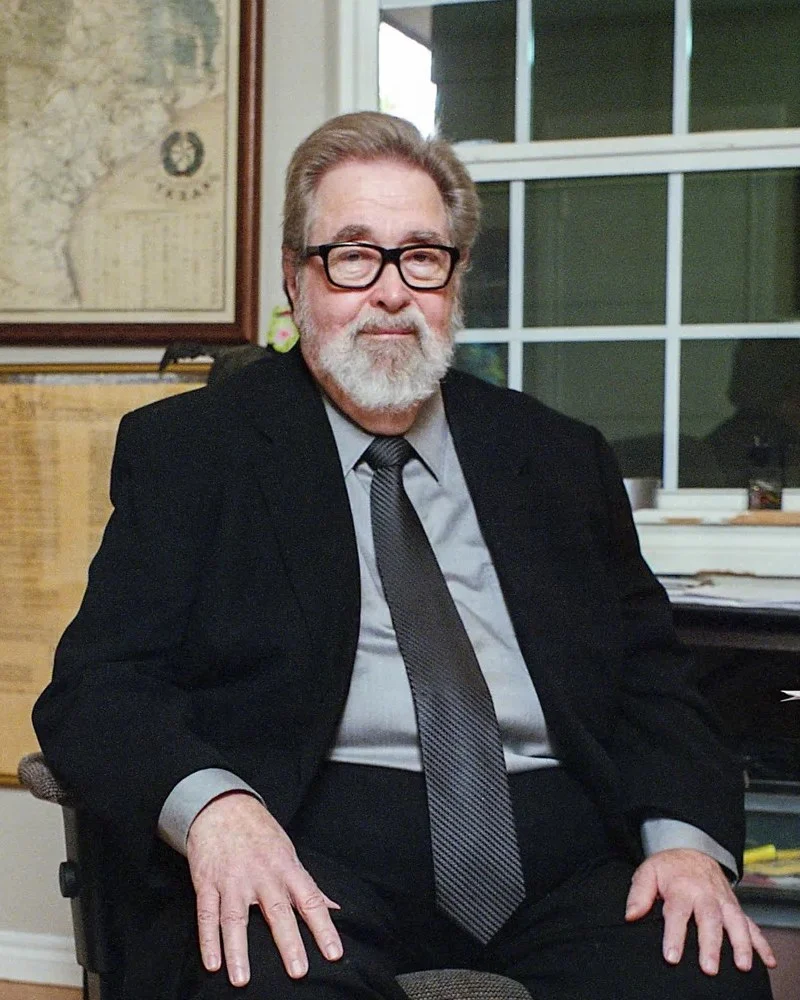
For more than half a century, Professor Metze has spent his career on one side of the American criminal justice system: the accused. First as a trial lawyer who built a private practice around pro bono defense for people who couldn’t afford it, then as a clinical professor, and through it all as a scholar who treats the courtroom as his primary focus. These are his published works and made readable for everyone, from law professors to teenagers with no legal training, because his arguments deserve a wider audience than the law reviews he wrote them for.
Published Papers
-
The Continuing Unevolving Model of Decency, Kennedy v. Louisiana in Peril
Criminal Law Practitioner
2025In 2008 the Supreme Court barred executions for child rape when no one died. Texas never repealed its own law. Professor Metze explains why he thinks today's Court is ready to undo that ruling.
-
Never Hesitate to Ask a Friend for Help
Voice for the Defense
2025A Texas lawyer defending a discipline case without counsel kept contacting the other side directly and was suspended for five years. Professor Metze saw something of himself in it, and recalls the friend who represented him for free.
-
Criminal Law (Year in Review)
Texas Bar Journal
2023Three Texas criminal law decisions from 2023 that changed the rules working lawyers practice under, reviewed for the annual Year in Review.
-
Safeguards to Prevent Juveniles from Incompetent Representation
Voice for the Defense
2022Young people in Texas juvenile court have a right to effective counsel. A Texas Tech law student, Jessica Lieck, and Professor Metze ask whether lawyers who don't understand child development can provide it.
-
Dissecting the ABA Texas Capital Punishment Assessment Report of 2013: Death and Texas, a Surprising Improvement
Akron Law Review
2017In September 2013, the American Bar Association published a 517-page report on Texas's death penalty.
-
The Attorney-Client Working Relationship: A Comparison of In-Person Versus Videoconferencing Modalities
Psychology, Public Policy, and Law
2016When the pandemic shut down courthouses in 2020, judges and lawyers had to figure out, almost overnight, whether the constitutional guarantee of "the assistance of counsel" could be delivered through a video screen.
-
Nothing Changes, It All Remains the Same: Modern Capital Punishment (Human Sacrifice by a Different Name)
Texas Tech Law Review
2014For Texas Tech's annual criminal law symposium, Professor Arnold Loewy gave the panel a single question to wrestle with: is capital punishment a good idea or a bad idea?
-
Feed Me Seymour: The Never-Ending Hunger of the Criminal Process for Procedural Rights and Removing Children from Its Shop of Horrors
Texas Tech Law Review
2013Professor Patrick Metze was asked a simple question at a Texas Tech criminal law symposium: should children accused of crimes have more, fewer, the same, or different legal protections than adults?
-
Plugging the School-to-Prison Pipeline by Improving Behavior and Protecting Core Judicial Functions: A Constitutional Crisis Looms
St. Mary's Law Journal
2013Texas tried a program that rewards good behavior in its juvenile lockup schools, and incidents fell. Meanwhile, it merged its juvenile agencies into one executive department. Professor Metze argues that merger puts judges' oversight of young people on probation at risk.
-
Speaking Truth to Power: The Obligation of the Courts to Enforce the Right to Counsel at Trial
Texas Tech Law Review
2012The Sixth Amendment guarantees every person charged with a crime the right to a lawyer.
-
Plugging the School to Prison Pipeline by Addressing Cultural Racism in Public Education Discipline
U.C. Davis Journal of Juvenile Law & Policy
2012You may have heard the phrase "school-to-prison pipeline." It names the path by which a child's misbehavior at school stops being handled by a teacher or a principal and starts being handled by police, courts, and probation officers.
-
Death and Texas: The Unevolved Model of Decency
Nebraska Law Review
2011Texas law now defines 146 separate ways a person can be sentenced to die. This 2011 Nebraska Law Review article argues the state capital system has grown back into the arbitrary machine the Supreme Court struck down in 1972.
-
Troy Davis, Lawrence Brewer, and Timothy McVeigh Should Still Be Alive: Certainty, Innocence, and the High Cost of Death and Immorality
Charleston Law Review
2011On September 21, 2011, two men were executed on the same day.
Clinic Newsletters
Eighteen years of annual notes from the Criminal Defense Clinic and the Capital Punishment Clinic at Texas Tech, 2007 through 2025. Forty-nine columns. The case ledgers, the student rosters, the chili cookoff results, the chosen student voices. Quieter than the published papers, and just as much him.
Days after Charlie Kirk was killed in September 2025, the Texas Tech law school cut Professor Metze off from his students, and a month later its dean handed him a resignation letter with a tenure hearing as the only alternative. Benjamin Wofford’s report for The New Yorker tells how a lawyer of fifty years was forced into retirement, and how a law student he supervised was put through an honor-code investigation. Read the article →